
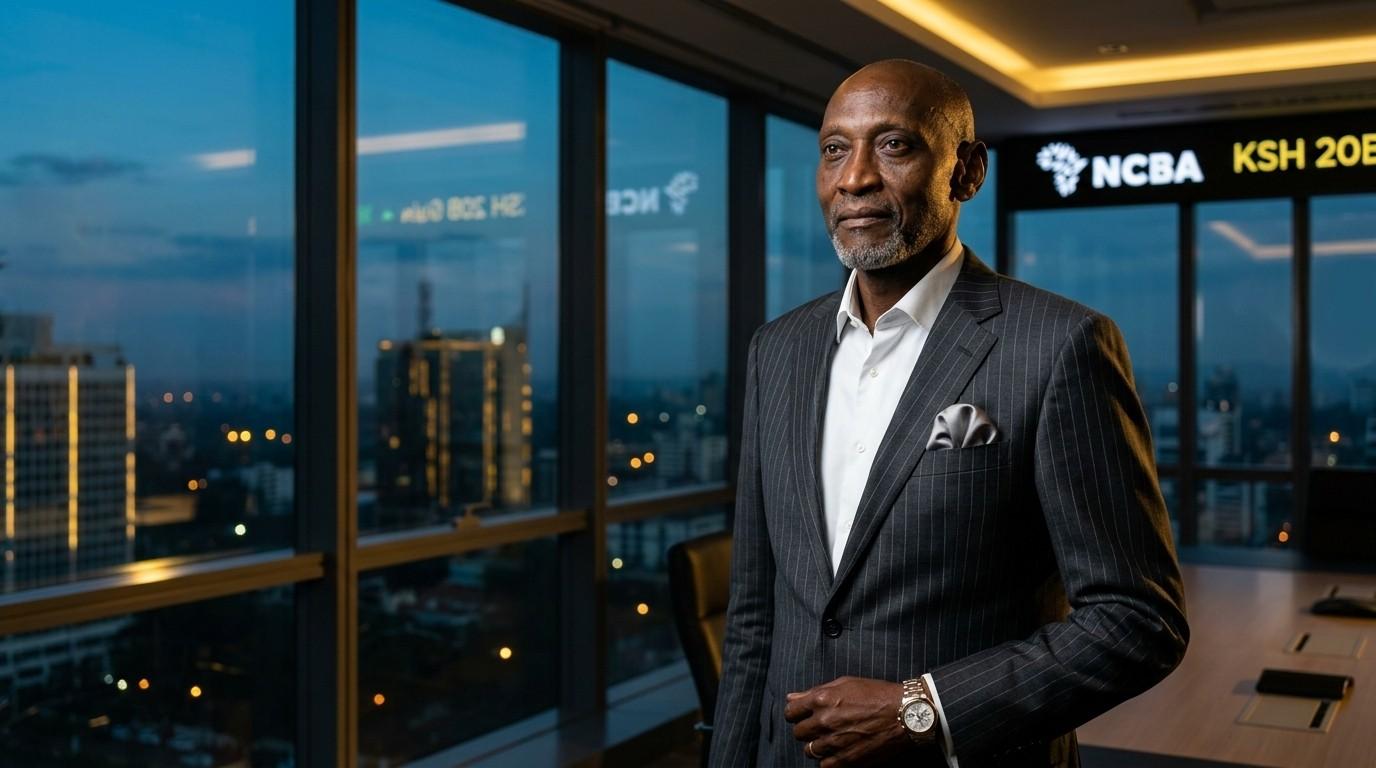
Muhoho Kenyatta is NCBA Group's largest individual shareholder, holding 227.3 million shares valued at Ksh 20 billion ($153.8 million) — the biggest personal fortune disclosed on the Nairobi Securities Exchange. His stake was publicly confirmed for the first time in May 2026 via a shareholder circular linked to Nedbank's 66% takeover offer.
A Fortune Finally Revealed
Muhoho Kenyatta NCBA ownership, long shrouded in the kind of deliberate opacity that defines Kenya's most powerful dynasties, burst into public view on May 4, 2026, when NCBA Group sent a circular to its shareholders disclosing, for the first time, the full extent of one man's stake in East Africa's fourth-largest bank by assets. The man is Muhoho Kenyatta — youngest child of Kenya's founding president Jomo Kenyatta, younger brother of former president Uhuru Kenyatta, and, it turns out, the single biggest individual stakeholder on the entire Nairobi Securities Exchange.
The revelation did not come by choice. It came by regulatory necessity. Nedbank Group of South Africa had tabled an offer to acquire a controlling 66% stake in NCBA, and when Muhoho was appointed a non-executive director of the NCBA Board on December 1, 2025, his appointment triggered a mandatory declaration of all beneficial interests. What that declaration revealed stopped Kenya's financial community in its tracks.
His 227.3 million shares — held directly and indirectly through a constellation of investment vehicles tracing back to the days of the old Commercial Bank of Africa — are currently worth approximately Ksh 20 billion, or roughly $153.8 million. This surpasses the banking stakes of Equity Group's James Mwangi, I&M Group's Suresh Shah, and every other individual investor whose holdings are publicly recorded on the NSE. It also complicates the simple narrative that the Kenyattas are merely legacy wealth custodians. In Muhoho, the family has a quietly formidable business strategist at the helm of a multi-billion shilling financial empire.
Who Is Muhoho Kenyatta?
To understand the significance of this disclosure, you first need to understand the man behind it. Muhoho Kenyatta, approximately 60 years old, is the lastborn child of Jomo Kenyatta — independent Kenya's first president — and Mama Ngina Kenyatta. He was educated at St. Mary's School in Nairobi, one of Kenya's most elite secondary institutions, before heading to Williams College in the United States, where he graduated with a Bachelor of Arts in Political Science in 1985.
While his elder brother Uhuru spent three decades building a political career that eventually reached State House, Muhoho chose a different path: commerce. He has spent the better part of four decades running and growing the Kenyatta family's sprawling business interests with a discipline and discretion that has kept him almost entirely out of the public eye. He rarely grants interviews, makes almost no public appearances at business forums, and has historically avoided any spotlight that did not directly serve a commercial purpose.

His most visible corporate role is as Executive Chairman and Chief Executive Officer of Brookside Dairy Limited, which he co-founded in 1993 and has since built into East Africa's largest dairy processor. Brookside's global profile was cemented by a strategic partnership with French food giant Danone, which holds a 40% stake in the company — one of the most significant foreign direct investments in Kenya's food manufacturing sector.
Before the CBA-NIC merger that created NCBA Group, Muhoho served as Vice-Chairman of the Commercial Bank of Africa — the institution that was, for decades, the Kenyatta family's primary banking vehicle. His appointment to the NCBA board in December 2025 was therefore less a debut and more a return to a seat he helped build.
Muhoho Kenyatta — Key Facts at a Glance
- Son of founding President Jomo Kenyatta; younger brother of ex-President Uhuru Kenyatta
- Graduated Williams College, USA, 1985 — Bachelor of Arts in Political Science
- Co-founded Brookside Dairy in 1993; grew it into East Africa's largest dairy processor
- Served as Vice-Chairman of Commercial Bank of Africa (CBA) before the NCBA merger
- Appointed NCBA non-executive director on December 1, 2025
- Holds 227.3 million NCBA shares (direct + indirect) worth Ksh 20 billion
- Due to receive Ksh 1.6 billion in dividends for FY2025
- Kenyatta family's total known NCBA exposure spans Enke Investments (217.4 million shares) and Muhoho's personal/indirect holding
The Disclosure That Changed Everything
For years, the Kenyatta family's position in NCBA was publicly acknowledged in broad strokes but never precisely mapped. Enke Investments, an entity long linked to the family, was known to control approximately 217.4 million NCBA shares — equivalent to a 13.2% stake. Muhoho himself was previously recorded as a direct holder of just 12.7 million shares, worth around Ksh 1.1 billion. That was the public picture: meaningful, but not extraordinary.
The May 4, 2026 circular blew that picture apart. In connection with Nedbank's buyout offer, NCBA was required to disclose the beneficial interests of all its directors. Muhoho's appointment to the board in December 2025 — likely made in part to formalise the family's role during the takeover process — meant his full beneficial interest had to be declared. The total: 227.3 million shares. The additional 214.6 million shares are held through a network of investment vehicles whose roots trace directly to the old Commercial Bank of Africa.
"His 227.3 million shares are the largest disclosed personal fortune on the Nairobi Securities Exchange — and dwarf the banking stakes of every other billionaire on the bourse."
The significance of the number extends well beyond the Kenyatta family. On a bourse where the wealthy are generally careful about what they show, Muhoho's Ksh 20 billion stake is now the benchmark by which all other personal NSE fortunes will be measured. As a reference point: Equity Group CEO James Mwangi, who built Equity into East Africa's largest bank by customer count over 25 years, holds 127.8 million Equity shares worth Ksh 9.6 billion. I&M Group director Suresh Shah holds 174.9 million shares worth Ksh 8.6 billion. Muhoho's position surpasses both by a significant margin.
According to Business Daily Africa, the disclosure also offers the first clear view of just how deeply the Kenyatta family is embedded in NCBA's ownership structure — and hints that the total family position, across all vehicles, may be far larger than any single line on the register suggests.
Two Founding Families: The Kenyattas and the Ndegwas
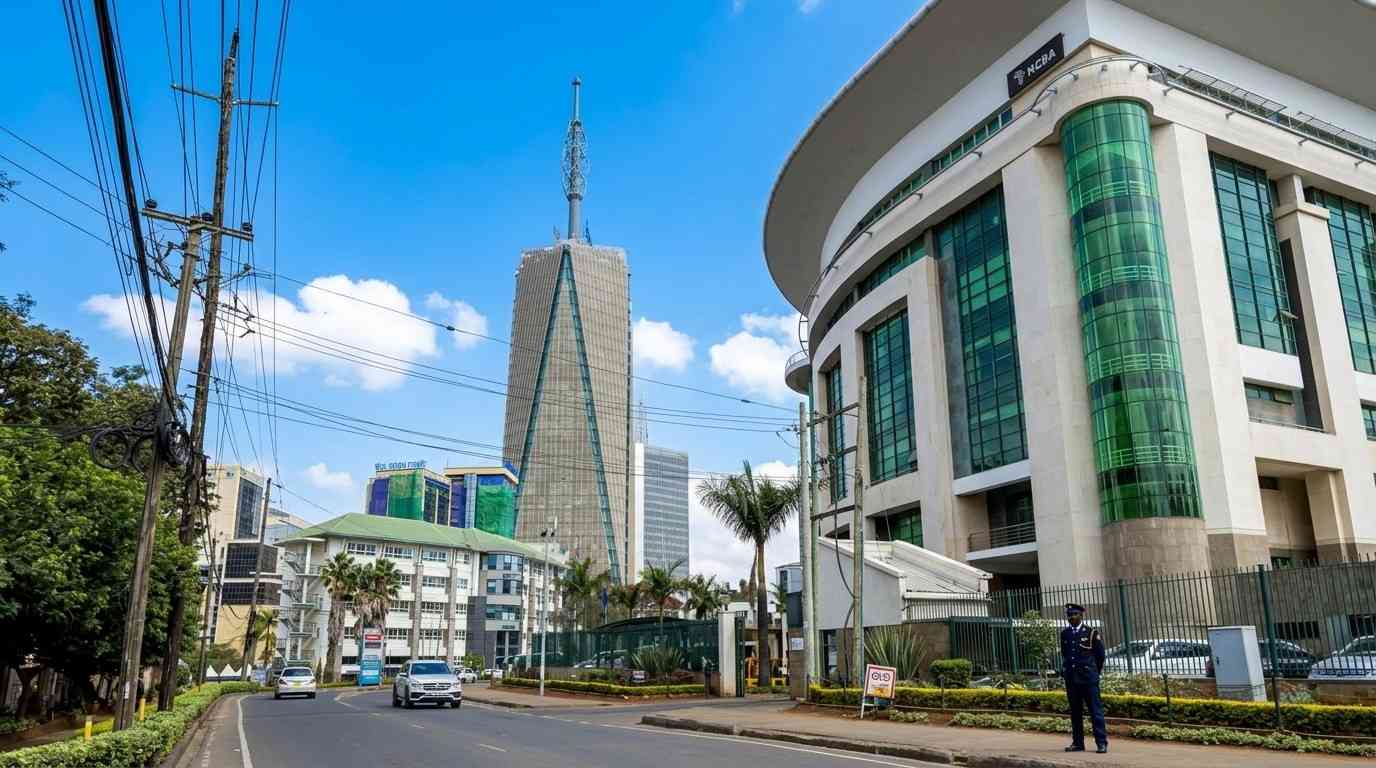
NCBA Group did not emerge from a vacuum. It was built on the foundations of two institutions — the Commercial Bank of Africa and NIC Group — that were themselves shaped by two of Kenya's most prominent post-independence families. Understanding the Kenyatta-Ndegwa axis is essential to understanding who owns NCBA today.
The Kenyatta Family
The Kenyattas arrived at CBA in the early years of independence, and the bank became the primary vehicle for funnelling the family's growing business interests through the banking system. When CBA and NIC merged in September 2019 to create NCBA Group, the Kenyattas carried their position into the new entity. Today, their exposure spans multiple vehicles:
Enke Investments, the primary Kenyatta investment entity, holds 217.4 million shares — a 13.2% stake. Muhoho's personal and indirect holdings add another 227.3 million shares. The combined picture suggests the family's aggregate exposure is, as Tuko.co.ke reports, potentially among the largest concentrations of private ownership in any publicly listed Kenyan company.
The Ndegwa Family
The other dynasty at the NCBA table is the family of the late Philip Ndegwa, who served as Governor of the Central Bank of Kenya. Their vehicle, First Chartered Securities, holds 246.1 million shares — a 14.94% stake, technically the largest single-entity position on the register. Individual family members hold additional personal stakes on top.
Andrew Ndegwa, a non-executive director, holds 77.6 million shares valued at Ksh 6.83 billion, earning him an estimated Ksh 551.3 million in dividends for 2025. His brother James Ndegwa, who chairs the NCBA board, holds 76.6 million shares worth Ksh 6.74 billion, with a dividend of Ksh 543.9 million. The combined Ndegwa family position — through First Chartered Securities and individual stakes — rivals the Kenyatta bloc in scale, making NCBA one of the most dynastic corporate ownership structures in East Africa.
According to Billionaires.Africa, the two families together effectively serve as the institutional memory and ownership backbone of NCBA — a role that dates back decades before either family's name appeared on the NSE.
| Shareholder | Shares (millions) | Value (Ksh) | Dividend (Ksh) |
|---|---|---|---|
| First Chartered Securities (Ndegwa family) | 246.1M (14.94%) | ~21.6B | n/a (entity) |
| Muhoho Kenyatta (direct + indirect) | 227.3M | ~20.0B | ~1.6B |
| Enke Investments (Kenyatta family) | 217.4M (13.2%) | ~19.1B | n/a (entity) |
| Andrew Ndegwa (personal) | 77.6M | ~6.83B | ~551.3M |
| James Ndegwa (personal) | 76.6M | ~6.74B | ~543.9M |
Source: NCBA Group shareholder circular, May 4 2026. NSE data current as of May 2026.
The Nedbank Deal: What It Means for Muhoho
The catalyst for Muhoho's disclosure was the most consequential corporate transaction in Kenya's banking sector in years: a formal offer by Nedbank Group of South Africa to acquire a controlling 66% stake in NCBA. The deal, structured as a cash-and-stock offer, is valued at approximately 13.9 billion South African rand — equivalent to Ksh 109.3 billion at current exchange rates.
Under the terms, NCBA shareholders can tender 66% of their holdings to Nedbank. Of that tendered pool, 80% will be converted into Nedbank shares at a rate of 4.02994 Nedbank shares for every 100 NCBA shares, with Nedbank shares priced at 250 rand (approximately Ksh 1,928.50). The remaining 20% of tendered shares will be purchased in cash at Ksh 2,100 per 100 NCBA shares — or Ksh 21 per share. Smaller shareholders who cannot qualify for at least 200 Nedbank shares will receive a cash price of Ksh 105 per share.
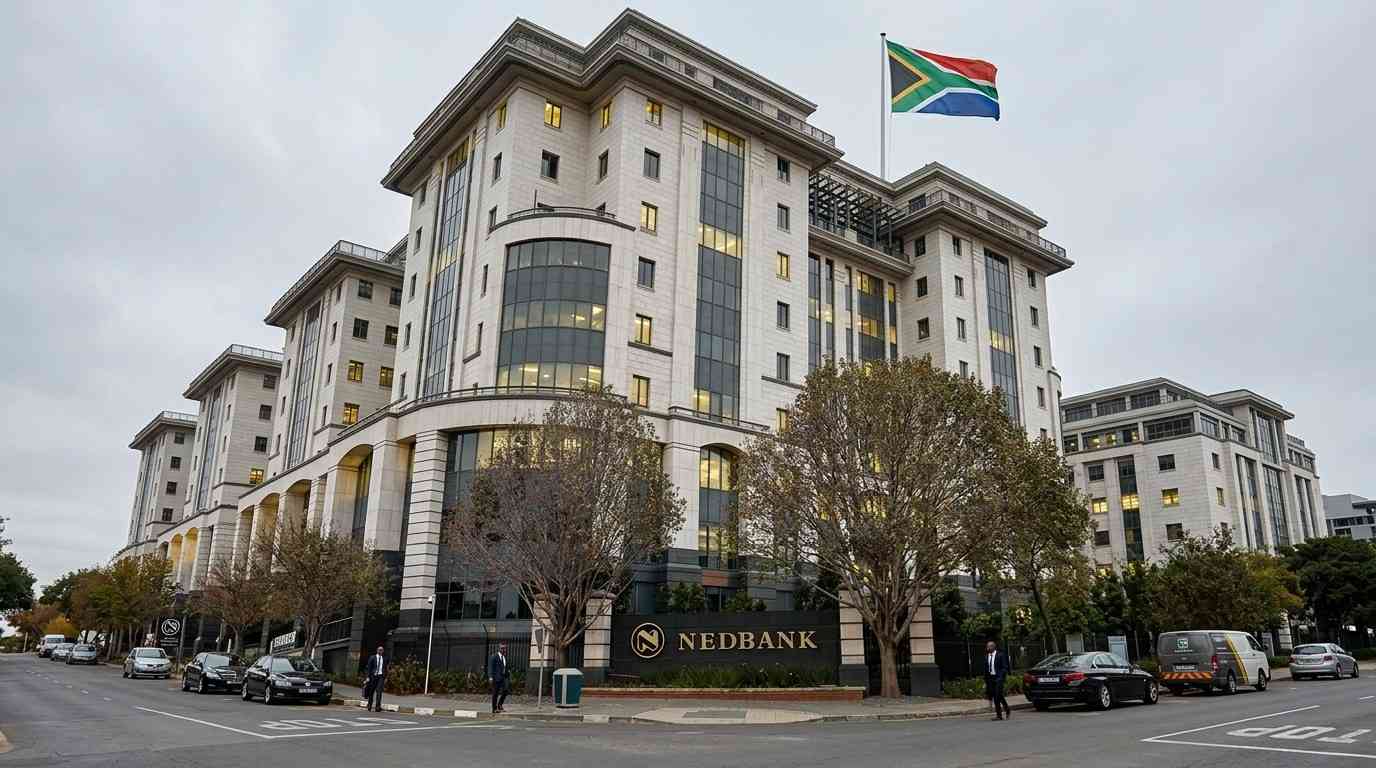
Nedbank has capped its cash outlay at Ksh 31.6 billion and its share issuance at 43.8 million Nedbank shares. NCBA will remain listed on the Nairobi Securities Exchange after completion, with minority investors retaining a 34% float — meaning the bank will not disappear from the NSE but will effectively become a South African-controlled subsidiary listed in Kenya.
For Muhoho and the wider Kenyatta family, the deal represents a profound strategic pivot. Those who accept Nedbank's offer will convert the majority of their NCBA exposure into shares of one of South Africa's largest banking groups, listed on the Johannesburg Stock Exchange (JSE). NCBA's board has endorsed this outcome, describing the JSE as offering strong liquidity, deep market diversity, and robust regulatory backing — advantages that the NSE, despite its growth, cannot yet fully match.
"Its breadth of sectors and instruments allows for natural portfolio diversification, and banking stocks in particular offer exposure to a well-capitalised, resilient financial system," the NCBA board said in its circular to shareholders. If the deal is completed, the Kenyatta family's institutional wealth — historically concentrated in Kenyan assets — will for the first time be meaningfully diversified into a globally recognised financial instrument. That is a transformation without precedent in the family's post-independence history.
Beyond NCBA: The Kenyatta Business Empire
NCBA is the most financially quantifiable pillar of the Kenyatta family's business interests, but it is far from the only one. The family's portfolio spans industries and decades in a way that few dynasties in sub-Saharan Africa can match.
Brookside Dairy, Muhoho's flagship operation, is the dominant dairy processor in East Africa, with an annual processing capacity that dwarfs its nearest competitors. The Danone partnership — which gave the French multinational a 40% stake — brought both capital and international supply-chain expertise, transforming Brookside from a local producer into a continental-scale operation. The company sells under several brands and supplies a significant portion of Kenya's processed milk market.
Heritage Hotels East Africa is the family's play in the premium tourism sector, operating a collection of upmarket lodges and tented camps across Kenya's most iconic wildlife destinations. The properties target the high-end international traveller and benefit from Kenya's positioning as one of Africa's premier safari destinations.
MediaMax Network anchors the family's media interests, with a portfolio that includes K24 TV, Kameme Radio, and The People Daily newspaper — assets that give the Kenyattas influence over information flows in the country's largest media market.
Peponi School, one of Nairobi's most selective private schools, rounds out a portfolio that also includes vast land holdings across Kenya — some of the most valuable and contested real estate in East Africa. Independent analysts have placed the total combined value of the Kenyatta family's domestic assets above $2.5 billion, though the family has never confirmed any estimate of their aggregate wealth.

Why This Disclosure Matters for Kenya's Financial Landscape
The significance of Muhoho's disclosure extends well beyond the balance sheet of one family. It shines a light on several structural features of Kenya's corporate ownership landscape that are rarely discussed openly.
Dynastic Ownership Is More Concentrated Than We Knew
Kenya's largest listed companies are frequently controlled, at their ownership foundations, by a surprisingly small number of families whose wealth traces to the independence era. The NCBA case demonstrates just how concentrated that ownership can be — and how opaque the structures used to maintain it. Investment entities like Enke Investments and First Chartered Securities are perfectly legal, but they effectively allow major shareholders to hold and exercise significant influence without the same level of visibility that direct personal holdings attract.
Board Appointments as Disclosure Triggers
The fact that Muhoho's full beneficial interest in NCBA was only revealed because he joined the board — triggering a mandatory disclosure requirement — raises broader questions about the transparency architecture of Kenya's capital markets. If one of the NSE's largest personal fortunes was hidden in plain sight for years, how many others remain undisclosed?
The Nedbank Deal as a Wealth Diversification Template
If the Nedbank transaction closes on its current terms, it will be the most significant voluntary diversification of a major Kenyan family fortune in decades. Converting a concentrated Kenyan banking stake into shares of a JSE-listed South African institution effectively gives the Kenyattas — and all other NCBA shareholders who participate — exposure to an economy and regulatory environment entirely distinct from Kenya's. For other wealthy Kenyan families watching closely, it may serve as a template.
The NSE's Wealth Map Is Being Redrawn
With Muhoho's Ksh 20 billion position now on the record, the Nairobi Securities Exchange has a new yardstick for personal wealth. James Mwangi's Ksh 9.6 billion Equity stake — widely cited as the NSE's largest known individual banking fortune — is now clearly second. That recalibration will inform how analysts, journalists, and policymakers think about the distribution of capital in Kenya's listed equity market for years to come.
Conclusion: Daylight on a Dynasty
For six decades, the Kenyatta family has been a dominant force in Kenyan commerce without ever fully opening its books to public scrutiny. That changed — at least partially — on May 4, 2026, when a routine regulatory disclosure tied to a South African bank's takeover bid revealed that Muhoho Kenyatta sits atop the Nairobi Securities Exchange's individual wealth ladder with a Ksh 20 billion stake in NCBA Group.
The disclosure reframes our understanding of NCBA's ownership, of the Kenyatta family's financial depth, and of the concentration of corporate power in Kenya more broadly. It also sets the stage for a historic transformation: if the Nedbank deal is completed, the Kenyatta family's most quantifiable asset will migrate from the NSE to the JSE — and the chapter of concentrated domestic banking ownership that began with the Commercial Bank of Africa will quietly close.
What comes next for Muhoho — whose deliberate preference for privacy has served him well for four decades — remains to be seen. But in the compressed, connected world of modern corporate finance, even the most carefully maintained curtain eventually comes down.

Sources & Further Reading
- Tuko.co.ke — Muhoho Kenyatta tops list of largest NCBA individual shareholders
- Billionaires.Africa — Muhoho Kenyatta revealed as NCBA's top individual shareholder at $154M
- Business Daily Africa — Muhoho Kenyatta reveals Sh20bn NCBA ownership
- NCBA Group Shareholder Circular, May 4, 2026 (NCBA Group PLC)