Laptop Specs Explained: The Complete Kenyan Buyer's Glossary
Laptop specs in Kenya get thrown around fast — "Core i5," "16GB RAM," "512GB SSD," "10th Gen" — and sellers rarely stop to explain what any of it means for you. This glossary breaks down every spec in plain English, so you know exactly what you're paying for before you send a single shilling.
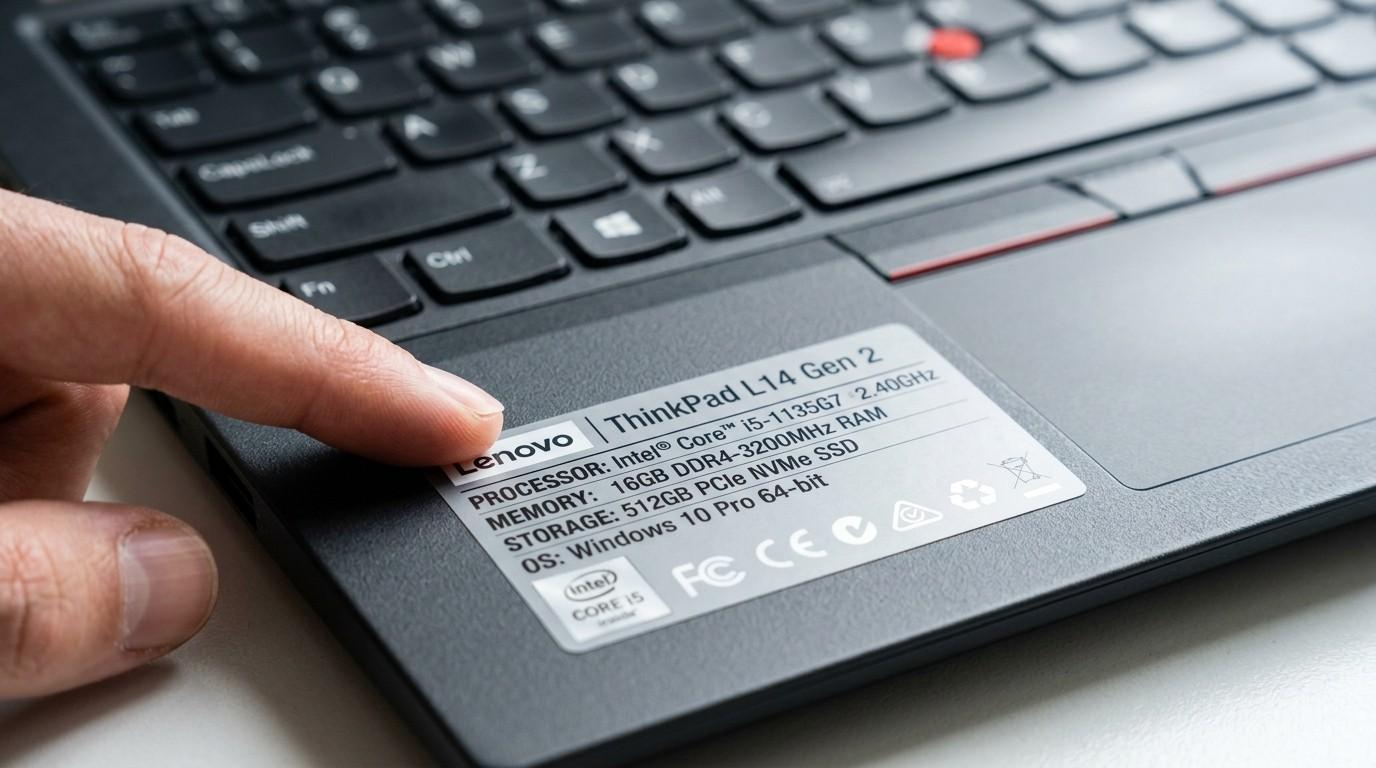
The four specs that matter most when buying a laptop in Kenya are the processor (speed), RAM (multitasking), storage type (SSD vs HDD), and screen. For everyday browsing, office work, and school, aim for at least a Core i5 or Ryzen 5, 8GB RAM, and an SSD — that combination will feel fast for years, not just on the day you buy it.
On This Page
- Processor (CPU): Core i3/i5/i7/i9 and Ryzen 3/5/7/9
- What "Generation" Means (and Why It Matters More Than the Name)
- RAM: How Much Do You Actually Need?
- Storage: SSD vs HDD
- Graphics: Integrated vs Dedicated GPU
- Screen: Resolution, Size, and Touchscreen
- Ports: USB-A, USB-C, HDMI, and Thunderbolt
- Battery Life: What the Hours Really Mean
- Refurbished Grading: What "Grade A" Ex-UK Actually Means
- Model Codes: Reading a ThinkPad or EliteBook Name
- Cheat Sheet: Minimum Specs by Use Case
- FAQ
Most laptop confusion in Kenya doesn't come from a bad purchase — it comes from buying blind. A seller says "Core i5, 8GB RAM" and it sounds impressive, but without context you can't tell if that's a great deal or an old chip dressed up in new marketing. This guide fixes that. Bookmark it, and refer back to it any time you're reading one of our other laptop guides and hit a spec you don't recognise.
Processor (CPU): Core i3/i5/i7/i9 and Ryzen 3/5/7/9
The processor is the "brain" of the laptop. It decides how fast programs open, how many browser tabs you can run without freezing, and how well the machine handles heavier work like video editing or coding. Intel and AMD both use a tiered naming system that roughly maps to each other:
Intel Core Family
Core i3 is fine for basic browsing and typing. Core i5 is the most common recommendation for Kenyan students, freelancers, and office staff — see our full Best Intel Core i5 Laptops in Kenya guide. Core i7 suits multitaskers and light creative work (Best Intel Core i7 Laptops in Kenya), while Core i9 is built for video editing, 3D rendering, and engineering software (Best Intel Core i9 Laptops in Kenya).
AMD Ryzen Family
AMD's Ryzen line mirrors Intel's tiers and usually ships with stronger built-in graphics, which helps with light photo editing and casual gaming. See our Best AMD Ryzen 5 Laptops in Kenya and Best AMD Ryzen 7 Laptops in Kenya guides for current picks.
Not sure which chip fits your work? Our Best Laptops by Profession in Kenya hub matches 12 professions to the right processor tier and price range.
What "Generation" Means (and Why It Matters More Than the Name)
Two laptops can both say "Core i5" and still perform very differently, because Intel and AMD release a new generation of each chip almost every year. The generation number is usually the first one or two digits after "i5-", for example the 7 in i5-7200U (7th Gen) or the 11 in i5-1135G7 (11th Gen).
A newer generation of the same tier is faster, more power-efficient, and has better battery life than an older one — often by a wide margin. This is why an 11th Gen Core i5 can outperform an 8th Gen Core i7 in everyday use. Read our dedicated breakdowns: Are 8th Gen Intel Laptops Worth Buying in Kenya? and 10th and 11th Gen Intel Laptops in Kenya.
| Generation range | What it means for you |
|---|---|
| 6th–8th Gen | Budget-friendly, fine for browsing, typing, and office apps. Battery life is average. |
| 10th–11th Gen | Noticeably faster, better graphics, longer battery life. The sweet spot for most buyers today. |
| 12th Gen and newer | Premium pricing, best for buyers who want the longest possible lifespan before the next upgrade. |
RAM: How Much Do You Actually Need?
RAM (memory) determines how many things your laptop can do at once without slowing down. Unlike storage, RAM doesn't hold your files permanently — it's your laptop's short-term workspace.
| RAM | Good for | Struggles with |
|---|---|---|
| 4GB | Very basic browsing, WhatsApp Web, typing | Multiple tabs, Zoom calls, Office running together |
| 8GB | Everyday office work, school, browsing, video calls | Heavy photo/video editing, many apps open at once |
| 16GB | Multitasking, coding, light editing, design work | Only struggles with professional 4K video or 3D rendering |
| 32GB+ | Video editing, 3D rendering, virtual machines | Rarely a bottleneck — overkill for most Kenyan buyers |
For most Kenyan students, freelancers, and office workers, 8GB is the practical minimum today and 16GB is the comfortable choice if your budget allows it.
Storage: SSD vs HDD
Storage is where your files, photos, and installed programs live permanently. The type of storage affects speed far more than the size does.
- HDD (hard disk drive): Older spinning-disk technology. Cheap per GB, but slow to boot and slow to open large programs. Increasingly rare on laptops sold in Kenya today.
- SSD (solid-state drive): No moving parts, boots in seconds, and makes every part of the laptop feel faster. This is the standard on nearly every laptop we stock.
A laptop with an SSD and an older processor will often feel snappier day-to-day than a laptop with a newer processor and an HDD. If a seller doesn't mention SSD or HDD, always ask — it's one of the most important specs on the whole machine.
Graphics: Integrated vs Dedicated GPU
Graphics processing handles anything visual — from everyday video playback to gaming and video editing.
- Integrated graphics (built into the processor, e.g. Intel UHD or Iris Xe) handle browsing, office work, YouTube, and light photo editing without issue.
- Dedicated graphics (a separate GPU chip, e.g. NVIDIA or AMD Radeon) are needed for gaming, video editing, 3D design, and CAD work.
See our Top Laptops with Dedicated Graphics in Kenya guide if your work depends on GPU power.
Screen: Resolution, Size, and Touchscreen
Resolution is how sharp the display is. HD (1366x768) is the entry level, Full HD or FHD (1920x1080) is the current standard and what we recommend for most buyers, and 4K is a premium option mainly useful for design and video work.
Size is a trade-off between portability and screen real estate: 13–14 inch laptops are easier to carry daily, while 15–16 inch screens suit desk-based work and creative tasks.
Touchscreen laptops add flexibility for note-taking, presentations, and 2-in-1 use, at a small premium. Browse our Best Laptops with Touchscreen in Kenya and Best Convertible Laptops in Kenya guides.
Ports: USB-A, USB-C, HDMI, and Thunderbolt
| Port | What it's for |
|---|---|
| USB-A | The classic rectangular port — flash disks, mice, most peripherals |
| USB-C | Smaller, reversible port used for charging, data transfer, and external monitors on newer laptops |
| HDMI | Connects to a TV or external monitor for presentations and dual-screen setups |
| Thunderbolt | A faster version of USB-C found on premium laptops, useful for external drives and high-res monitors |
If you regularly present to a projector or TV in a boardroom or classroom, confirm the laptop has HDMI or a USB-C-to-HDMI adapter before you buy.
Battery Life: What the Hours Really Mean
Advertised battery life is measured under light use in a lab, so real-world Kenyan use (Wi-Fi on, screen brightness up, multiple tabs) is usually 60–80% of the stated figure. As a rough guide:
- 4–6 hours advertised: Expect roughly a half-day of real use — fine if you're usually near a socket.
- 7–9 hours advertised: A full workday or lecture day on one charge for most people.
- 10+ hours advertised: Built for travel and long days away from power, common on newer generations.
Battery health also fades with age on refurbished units — always ask your seller to demonstrate a full charge cycle before you buy.
Refurbished Grading: What "Grade A" Ex-UK Actually Means
Since most laptops sold in Kenya are refurbished ex-UK or ex-US corporate units, sellers grade them by cosmetic condition:
- Grade A: Little to no visible wear, screen and keyboard in excellent condition, closest to new.
- Grade B: Light scuffs or minor marks that don't affect performance — the most common grade sold in Kenya.
- Grade C: Noticeable cosmetic wear but fully functional — the budget option.
Grading is about cosmetics, not performance — a Grade B laptop runs exactly as fast as a Grade A of the same spec. Read our full Best Ex-UK Laptops in Kenya guide and our Laptop Buying Checklist for Kenyans before you commit to any grade.
Model Codes: Reading a ThinkPad or EliteBook Name
Business laptop names look cryptic but follow a logical pattern once you know it:
- HP EliteBook 840 G5: "840" is the series/screen-size class, "G5" is the generation of that series — a higher G-number is newer.
- Lenovo ThinkPad T480: "T" series is the mainstream business line, "480" places its generation — ThinkPad X-series (like the X1 Carbon) is the ultra-light line.
- Dell Latitude 5540: The first digit groups the series tier, the rest identifies the generation and configuration.
Compare specific brands in our Best Dell Latitude Models in Kenya and Best Lenovo Laptops in Kenya guides, or see a full head-to-head in our Laptop Comparison in Kenya post.
Cheat Sheet: Minimum Specs by Use Case
| Use case | Minimum recommended spec | |
|---|---|---|
| Browsing, WhatsApp, typing | Core i3/Ryzen 3, 4GB RAM, SSD | Good enough |
| Students & office work | Core i5/Ryzen 5, 8GB RAM, SSD | Best value |
| Web development & coding | Core i5/Ryzen 5, 16GB RAM, SSD | Best value |
| Graphic design | Core i7/Ryzen 7, 16GB RAM, dedicated graphics | Good enough |
| Video editing / 3D rendering | Core i9/Ryzen 9, 16–32GB RAM, dedicated graphics | Best value |
| Basic browsing only, tightest budget | Anything below 4GB RAM or still running an HDD | Avoid |
Still unsure which combination fits your budget? Our Best Budget Laptops in Kenya and Best Business Laptops in Kenya guides break down real in-stock options at every price point.
Know What You Need Now? Let's Find Your Laptop.
Tell us your budget and what you use it for, and we'll match you to an in-stock, tested unit — no guesswork.
Chat on WhatsApp Call 0714 701 814Frequently Asked Questions
What is the most important laptop spec for everyday use in Kenya?
For most Kenyan buyers, the processor and RAM matter most together. A Core i5 or Ryzen 5 with at least 8GB of RAM and an SSD comfortably handles browsing, office work, school, and video calls without slowing down.
Is 8GB RAM enough for a laptop in 2026?
Yes, for everyday browsing, office apps, and school work, 8GB RAM is still enough. If you multitask heavily, code, or run design software, 16GB will feel noticeably smoother.
Does laptop generation matter more than the processor name?
Often, yes. A newer generation of a lower-tier chip, such as an 11th Gen Core i5, can outperform an older higher-tier chip, such as an 8th Gen Core i7, in everyday tasks and battery life.
What does SSD mean and why does it matter?
SSD stands for solid-state drive, a fast type of storage with no moving parts. A laptop with an SSD boots and opens programs far faster than one with an older HDD, even if the processor is the same.
What is the difference between integrated and dedicated graphics?
Integrated graphics are built into the processor and handle everyday tasks like browsing and video playback. Dedicated graphics are a separate chip needed for gaming, video editing, and 3D design work.
What does "Grade A" mean on a refurbished laptop in Kenya?
Grade A describes cosmetic condition, meaning little to no visible wear on the body and screen. It does not mean the laptop performs faster than a Grade B unit with the same specs — grading is about appearance, not speed.
Still Not Sure Which Spec Combination Fits You?
All units in our stock are tested and graded before sale, with a fair warranty period. Reach out and we'll walk you through it in plain language.
WhatsApp 0714 701 814